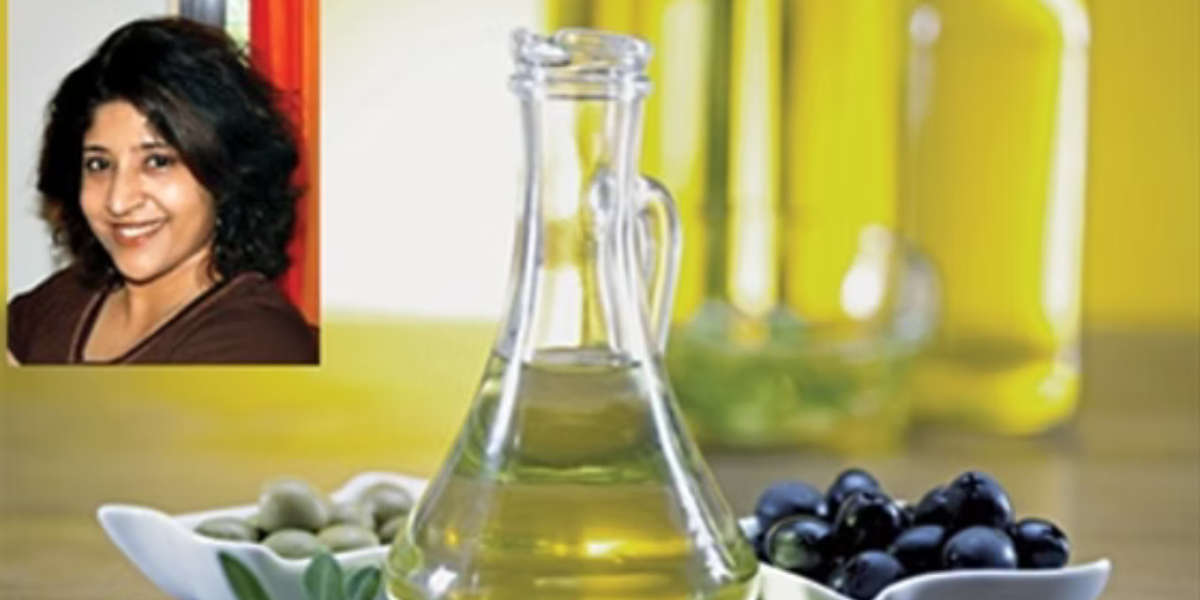
Olive oil has become a staple in many households but people are sometimes confused about which type of olive oil to buy and how best to use it. Rita Date spells out the DO’S and DONT’S.
DON’T buy Pomace Virgin/ Extra Virgin/ Pomace/ Light/ Flavoured — there are so many choices!
Pomace is being marketed as the oil with a higher smoking point that is needed for our Indian tadkas. Pomace is the name given to the solid leftovers of olives, including skins, pulp, seeds, and stems, after ‘extra virgin’ and ‘pure olive’ oils have been extracted in the first and second presses. Olive Oil Times, a European industry magazine, says that the amount of oil in the pomace is so minuscule that it cannot be extracted by pressing, but only through the combined use of chemical solvents (such as hexane) and extremely high heat. Olive pomace oil sometimes contains harmful components known as polycyclic aromatic hydrocarbons (PAHs) like benzopyrene, which research has shown to be highly carcinogenic. This substance is the result of the incomplete combustion of the fats in olives. Spain has the most strict laws about olive oil quality and they banned pomace olive oil in 2001. Many other countries followed.
DON’T buy ‘light’ to save calories
All olive oils have roughly the same amount of calories and fat (about 120 calories and 14g fat per tbsp). ‘Light’ is is highly refined to make it more neutral than other types of olive oil.
DON’T keep olive oil right next to the stove.
Heat and light will make olive oil go rancid very quickly. Buy olive oil in a dark-coloured glass or tin containers, and store it in a cool spot, away from sunlight.
DON’T buy too many when you see a great deal.
Unless you will be using the oil quickly, it’s better to buy olive oil in smaller quantities. You should aim to use it within two months.
Olive oil has become a staple in many households but people are sometimes confused about which type of olive oil to buy and how best to use it. Rita Date spells out the DO’S and DONT’S.
DON’T buy Pomace Virgin/ Extra Virgin/ Pomace/ Light/ Flavoured — there are so many choices!
Pomace is being marketed as the oil with a higher smoking point that is needed for our Indian tadkas. Pomace is the name given to the solid leftovers of olives, including skins, pulp, seeds, and stems, after ‘extra virgin’ and ‘pure olive’ oils have been extracted in the first and second presses. Olive Oil Times, a European industry magazine, says that the amount of oil in the pomace is so minuscule that it cannot be extracted by pressing, but only through the combined use of chemical solvents (such as hexane) and extremely high heat. Olive pomace oil sometimes contains harmful components known as polycyclic aromatic hydrocarbons (PAHs) like benzopyrene, which research has shown to be highly carcinogenic. This substance is the result of the incomplete combustion of the fats in olives. Spain has the most strict laws about olive oil quality and they banned pomace olive oil in 2001. Many other countries followed.
DON’T buy ‘light’ to save calories
All olive oils have roughly the same amount of calories and fat (about 120 calories and 14g fat per tbsp). ‘Light’ is is highly refined to make it more neutral than other types of olive oil.
DON’T keep olive oil right next to the stove.
Heat and light will make olive oil go rancid very quickly. Buy olive oil in a dark-coloured glass or tin containers, and store it in a cool spot, away from sunlight.
DON’T buy too many when you see a great deal.
Unless you will be using the oil quickly, it’s better to buy olive oil in smaller quantities. You should aim to use it within two months.
Olive oil has become a staple in many households but people are sometimes confused about which type of olive oil to buy and how best to use it. Rita Date spells out the DO’S and DONT’S.
DON’T buy Pomace Virgin/ Extra Virgin/ Pomace/ Light/ Flavoured — there are so many choices!
Pomace is being marketed as the oil with a higher smoking point that is needed for our Indian tadkas. Pomace is the name given to the solid leftovers of olives, including skins, pulp, seeds, and stems, after ‘extra virgin’ and ‘pure olive’ oils have been extracted in the first and second presses. Olive Oil Times, a European industry magazine, says that the amount of oil in the pomace is so minuscule that it cannot be extracted by pressing, but only through the combined use of chemical solvents (such as hexane) and extremely high heat. Olive pomace oil sometimes contains harmful components known as polycyclic aromatic hydrocarbons (PAHs) like benzopyrene, which research has shown to be highly carcinogenic. This substance is the result of the incomplete combustion of the fats in olives. Spain has the most strict laws about olive oil quality and they banned pomace olive oil in 2001. Many other countries followed.
DON’T buy ‘light’ to save calories
All olive oils have roughly the same amount of calories and fat (about 120 calories and 14g fat per tbsp). ‘Light’ is is highly refined to make it more neutral than other types of olive oil.
DON’T keep olive oil right next to the stove.
Heat and light will make olive oil go rancid very quickly. Buy olive oil in a dark-coloured glass or tin containers, and store it in a cool spot, away from sunlight.
DON’T buy too many when you see a great deal.
Unless you will be using the oil quickly, it’s better to buy olive oil in smaller quantities. You should aim to use it within two months.