Healthy Cooking Technique – Poaching
When you hear the term poaching you may think of companies unscrupulously luring away employees from their current place of work. Poaching however, is a cooking technique that you should add to your cooking repertoire. It is a healthy cooking method where subtle flavours are infused in the food by seasoned simmering liquids. With the minimal use of oil and abundant flavour and moistness, poaching is a darling among the weight conscious. Everyone has heard of poached eggs but few are aware that just about anything can be poached including fish, chicken vegetables and fruits. This is not a difficult cooking technique to be only used by French chefs – anyone can poach!
The difference between boiling and poaching is the temperature in the liquids. When poaching, you are merely simmering and the food gets cooked slowly preserving moisture. When you boil foods the temperature of the liquid is at the maximum 100° C and is too fierce to cook foods evenly — delicate foods such as eggs and fish will fall apart. Boiling foods also depletes the foods of many of the essential vitamins and minerals.
The key to poaching is to ensure that the liquid does not come to a boil. The only exception being eggs — because eggs cook quickly, the liquid is first brought to a boil and then turned off. When poaching eggs, vinegar is added to help keep the whites in tact (about 1 t. to 2-3 cups of liquid).
Here are the simple steps to poachcing:
2. The choice of liquid and flavourings is what poaching is all about and central to the preparation of the dish. Stock or broth adds instant flavor to the meal. Chicken stock for chicken, beef stock for beef, vegetable stock for fish. Ideally this should be done the day before. And, of course, water will always work.
3. Next, you need an acid. Wine, lemon juice and vinegar are all good choices. Add about 1/4 cup of acid to each quart of your stock or water. You should be able to taste the acid in the liquid. Finally, add your flavourings.
4. Add herbs, spices, and vegetables to the poaching liquid, the meat will absorb them. Good things to add include: basil, chives, coriander, dill, oregano, parsley, rosemary, tarragon, thyme, bay leaf, peppercorns, onions, carrots. When using fresh herbs, don’t worry about chopping things up — just place it in the pot as is.
5. Bring the poaching liquid to a boil, and then add the raw material to cook which should be completely covered by the poaching liquid by about one inch. This ensures that the things cooks evenly. After the food is added, reduce the heat to the proper poaching temperature. An instant read thermometer comes in handy here. If poaching fish, the temperature of the liquid should be maintained between 80ºC and 85ºC. The poaching liquid for chicken should be between 70ºC and 80ºC. If you don’t have a thermometer, don’t worry. Just keep the temperature below that of a simmer. You may get a couple of bubbles but the liquid should be bubbling much and the surface will appear to be flowing.
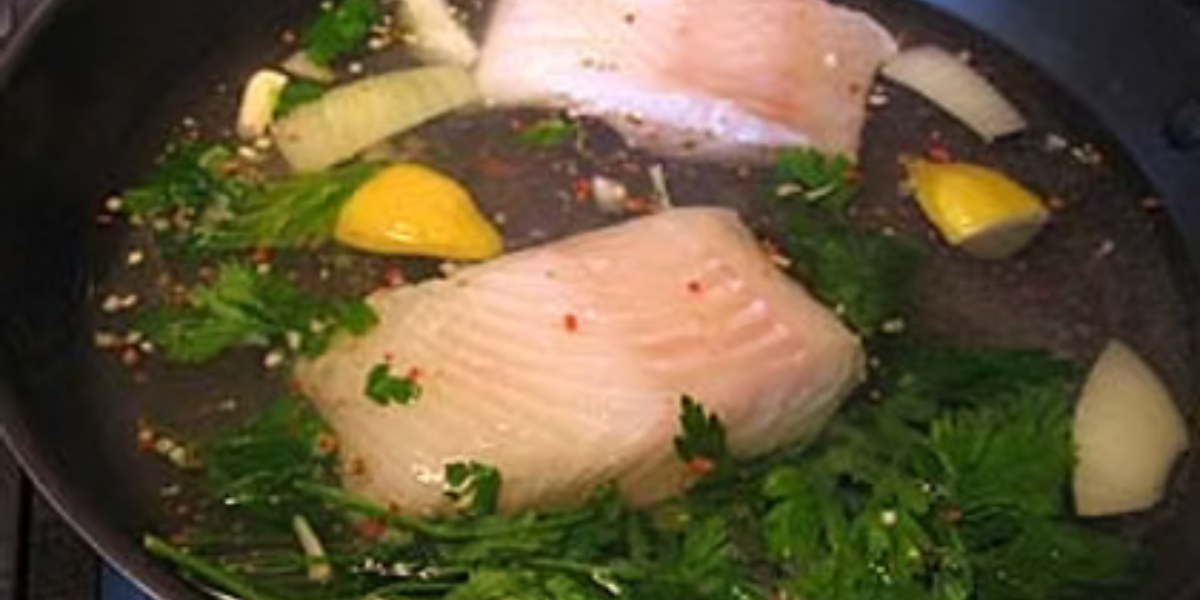
Poached Rawas Fillets – This is a French recipe but you can experiment with other herbs – including red chilies and curry leaves.
Method:
Put wine, water, dill, parsley and onions in a sauté pan and bring to a simmer on medium heat. Place fillets in the pan. Cover. Cook 5-7 minutes or until desired tenderness. Do not overcook. Add freshly ground pepper while serving.
Vanilla Poached Pears (adapted from foodnetwork.com)
- 400 ml of white wine
- 1/2 cup water
- 1/3 cup sugar
- whole vanilla bean, split and scraped
- firm pears – 2, peeled leaving the stem intact
Method:
1. Place the white wine, water, sugar and vanilla bean and pulp into a 4-quart saucepan over medium-high heat and bring to a boil.
4. Remove the pears from the refrigerator, spoon the sauce over the pears and serve.
Published in Pune Mirror, July 11, 2011
Healthy Cooking Technique – Poaching
When you hear the term poaching you may think of companies unscrupulously luring away employees from their current place of work. Poaching however, is a cooking technique that you should add to your cooking repertoire. It is a healthy cooking method where subtle flavours are infused in the food by seasoned simmering liquids. With the minimal use of oil and abundant flavour and moistness, poaching is a darling among the weight conscious. Everyone has heard of poached eggs but few are aware that just about anything can be poached including fish, chicken vegetables and fruits. This is not a difficult cooking technique to be only used by French chefs – anyone can poach!
The difference between boiling and poaching is the temperature in the liquids. When poaching, you are merely simmering and the food gets cooked slowly preserving moisture. When you boil foods the temperature of the liquid is at the maximum 100° C and is too fierce to cook foods evenly — delicate foods such as eggs and fish will fall apart. Boiling foods also depletes the foods of many of the essential vitamins and minerals.
The key to poaching is to ensure that the liquid does not come to a boil. The only exception being eggs — because eggs cook quickly, the liquid is first brought to a boil and then turned off. When poaching eggs, vinegar is added to help keep the whites in tact (about 1 t. to 2-3 cups of liquid).
Here are the simple steps to poachcing:
2. The choice of liquid and flavourings is what poaching is all about and central to the preparation of the dish. Stock or broth adds instant flavor to the meal. Chicken stock for chicken, beef stock for beef, vegetable stock for fish. Ideally this should be done the day before. And, of course, water will always work.
3. Next, you need an acid. Wine, lemon juice and vinegar are all good choices. Add about 1/4 cup of acid to each quart of your stock or water. You should be able to taste the acid in the liquid. Finally, add your flavourings.
4. Add herbs, spices, and vegetables to the poaching liquid, the meat will absorb them. Good things to add include: basil, chives, coriander, dill, oregano, parsley, rosemary, tarragon, thyme, bay leaf, peppercorns, onions, carrots. When using fresh herbs, don’t worry about chopping things up — just place it in the pot as is.
5. Bring the poaching liquid to a boil, and then add the raw material to cook which should be completely covered by the poaching liquid by about one inch. This ensures that the things cooks evenly. After the food is added, reduce the heat to the proper poaching temperature. An instant read thermometer comes in handy here. If poaching fish, the temperature of the liquid should be maintained between 80ºC and 85ºC. The poaching liquid for chicken should be between 70ºC and 80ºC. If you don’t have a thermometer, don’t worry. Just keep the temperature below that of a simmer. You may get a couple of bubbles but the liquid should be bubbling much and the surface will appear to be flowing.
Poached Rawas Fillets – This is a French recipe but you can experiment with other herbs – including red chilies and curry leaves.
Method:
Put wine, water, dill, parsley and onions in a sauté pan and bring to a simmer on medium heat. Place fillets in the pan. Cover. Cook 5-7 minutes or until desired tenderness. Do not overcook. Add freshly ground pepper while serving.
Vanilla Poached Pears (adapted from foodnetwork.com)
- 400 ml of white wine
- 1/2 cup water
- 1/3 cup sugar
- whole vanilla bean, split and scraped
- firm pears – 2, peeled leaving the stem intact
Method:
1. Place the white wine, water, sugar and vanilla bean and pulp into a 4-quart saucepan over medium-high heat and bring to a boil.
4. Remove the pears from the refrigerator, spoon the sauce over the pears and serve.